
The price list has a row: "Carport for two cars, timber, sheet roof, 6 × 5 m", and one price beside it. In the cell next to it sits a note: "different rafters next to a house and in snow".
A price by dimensions is fine. What isn't fine is that the snow region, the house wall and the eave height live in the salesperson's head. The customer doesn't enter them, and the colleague in production finds them out when the order arrives.
A carport configurator has to count the snow region, the house wall, the roofing, the solar panels and the door space for cars besides the dimensions, because each of them changes both the structure and the price. That is why a carport configurator starts with rules, not with a 3D model.
A carport: five things a price by dimensions can't see
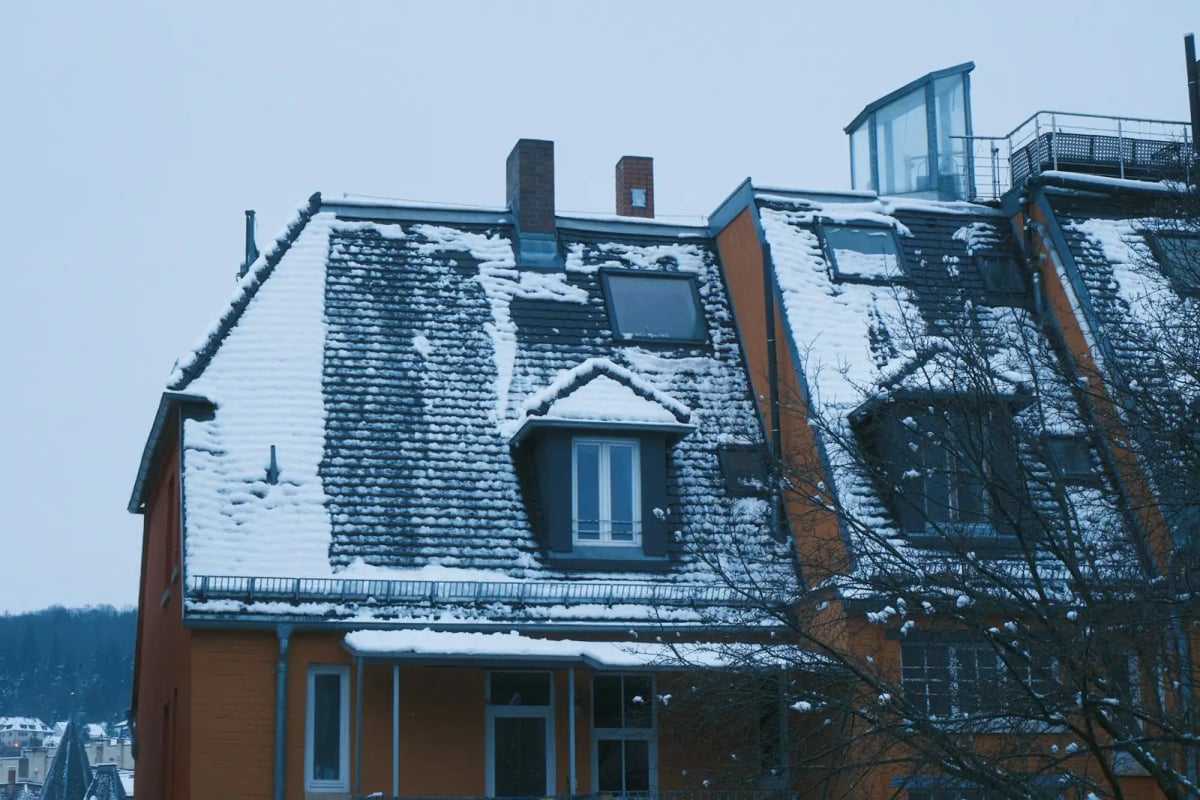
- Snow. The same width means one rafter in the lowlands and another in the mountains.
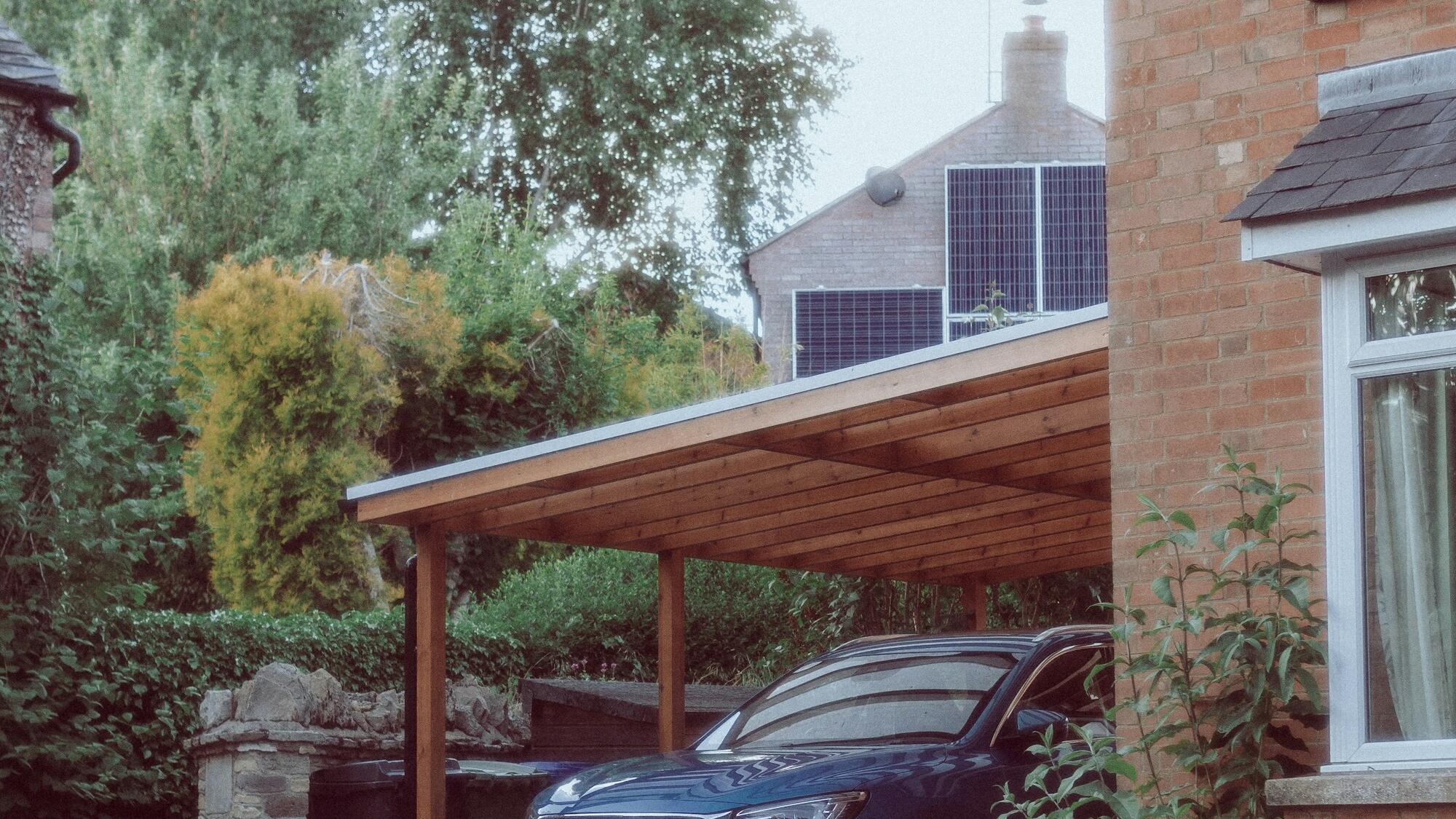
- The house wall. Next to a house, drifted snow gathers under the eave and the wall has to carry the load.
- The roofing. Sheet metal, roofing membrane and polycarbonate take snow and pitch differently.
- Solar panels. The modules add weight and need a pitch, a distribution board and room for a battery.
- Car doors. A double carport where an SUV's doors can't open is badly designed, even if the car fits.
Nobody is doing anything wrong here. A price list is written by dimensions because a dimension is what a customer can say straight away.
What a carport configurator has to count
The span changes with the snow
According to the table in our carport engine, an 8 × 22 cm rafter at 0.7 m spacing under a light sheet roof spans 6.81 m under a ground snow load of 0.85 kN/m² and only 4.92 m under 3.0 kN/m². The same carport width therefore needs a larger section in the mountains. The figures are indicative and the maker's structural calculation decides.
The house wall raises the snow class
The configurator puts the site into one of four snow classes. For timber they cover loads up to 3.0 kN/m², and above that the demo price isn't shown and a structural engineer decides. For a carport attached to a house, drifted snow gathers under the eave: in the demo scene, with an eave 6.8 m high, it moves a Slovak carport into the highest class. The configurator also warns that the wall has to carry the load.
The roofing follows the snow
From snow class S3 the configurator doesn't allow polycarbonate and switches the roofing to trapezoidal sheet, with a notice. The customer can't put together a roofing that production would have to send back.
The width follows the car doors
For a double carport the configurator opens the design at the smallest width where an SUV's doors can open: 6.1 m in Slovakia and Czechia, 6.4 m in Finland. The customer can make it narrower, but gets a warning.
Solar panels have a pitch and a size
Under a 5° pitch the configurator warns, and from 10° it recommends, because modules clean themselves better in the rain. The module grid is laid out on a demo module of 1,722 × 1,134 mm and 435 Wp.

One configurator, three markets
The market, that is Slovakia, Czechia or Finland, is set by the language of the configurator, not by the customer. With the language come the snow regions, the price list and the permit notices. The configurator shows permit information by market and area, but the building authority decides.
Where we stand
An existing foundation supports pergolas, fences and verandas. The carport is in preparation. The rules above come from our carport engine, which doesn't have its own page in the configurator catalogue yet. During implementation, we set up the span and snow tables from your own documents.
When not to build a carport configurator
Not every firm needs one. In these situations a price list is enough:
- You sell finished kits with no customisation. Fixed widths and one snow region can be written as a list of rows.
- A structural engineer always sets the price. If every carport is assessed by a designer, the configurator speeds up the brief but doesn't change the price.
- You work in one snow region with one roofing. There are so few rules that a price list can hold them.
If you didn't recognise yourself in any of these, carry on.
A five-minute test: is it time?
Open the price list of your last carport and answer four questions:
- Does the price list have a column for the snow region? If not, one price applies in the lowlands and in the mountains alike.
- Can you say what changes for a carport attached to a house? If only one person can, it is a note in a cell.
- Do you refuse a width where a car's doors can't open? If not, a customer will order it.
- Do you count solar panels and a charger as separate items with their own rules? If not, the salesperson has to work out any enquiry that has them.
The first step takes five minutes and doesn't need us: write down five things that changed the price of your last carport apart from dimensions. That is the first list of rules.
Frequently asked questions
Does a carport need a building permit?
It depends on the market, the area, and whether it is attached to a house or has a shed under it. The configurator shows a notice by market, but the building authority decides.
How is snow counted on a carport?
The configurator puts the site into a snow class, picks the rafter span from it and, next to a house, adds drifted snow. The figures are indicative and the maker's structural calculation decides.
Can a carport with solar panels be priced in a configurator?
Solar panels are part of the rules: pitch, number of modules, battery and charger. During implementation we set up how they are counted into the price. What an enquiry should contain is the subject of What a made-to-order enquiry should contain.
What now
And the note "different rafters next to a house and in snow"? From a cell one person knows, it becomes a rule the customer enters too: the site, the wall, the roofing.
If you make carports, see the pricing or send us your span and snow tables and we will assess what of them can be turned into rules.