

The meaning of CPQ is configure, price, quote. It is software, or a process, that helps put together a product configuration that can actually be built, work out its price from rules and issue a quote. A salesperson usually works with it, and it is normally connected to a CRM and an ERP. For a made-to-order firm of 5 to 20 people, the first step is usually a complete brief from the customer and a price list turned into rules. A full CPQ system comes later.
Picture an email from a software vendor with the subject line "CPQ for your business". Meanwhile your price list lives in a file called pricelist_FINAL_v7.xlsx, and the latest enquiry in your inbox reads "How much is a pergola?". No dimensions, but plenty of goodwill.
CPQ meaning: configure, price, quote
The abbreviation describes three steps a made-to-order firm already takes today, often in a salesperson's head and a spreadsheet. CPQ writes them down as rules, so they come out the same whoever happens to be writing the quote. The examples below are rules that treede's configurators for verandas and fences really work by.
Configure: a build that can be made
The first step checks whether the chosen combination can be manufactured and installed. Taste is left to the customer. Production limits are not.
- Veranda: a glass roof can project at most 4 m, a polycarbonate roof at most 5 m. The configurator won't allow a longer projection with a glass roof, even if the customer set it earlier with polycarbonate.
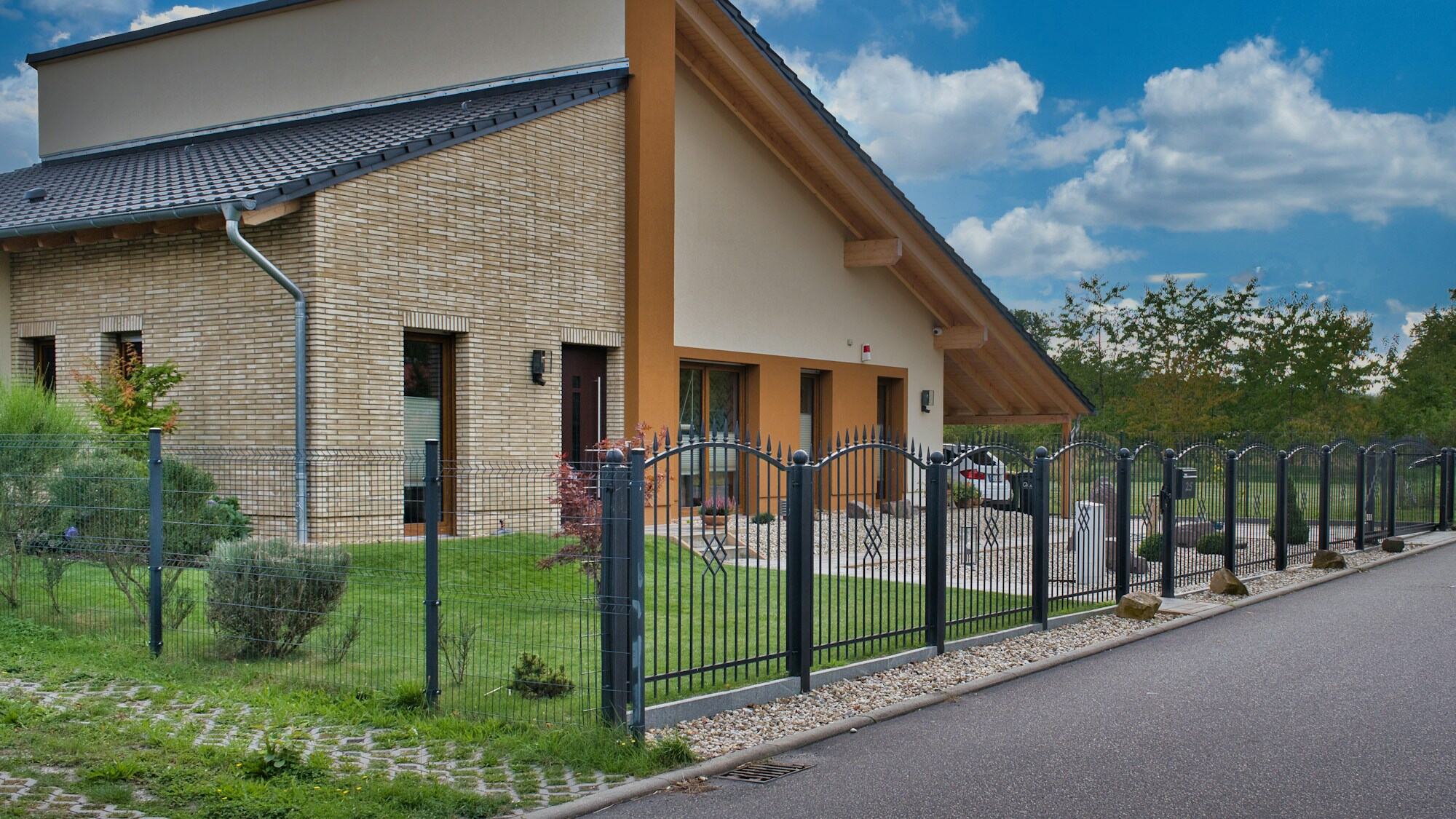
- Fence: a single gate is 900 or 1,000 mm wide, a double swing gate or a sliding gate 3,000, 3,500 or 4,000 mm. The configurator only adds another gate if its opening still fits on that side of the fence next to the ones already there.

When the customer does this step on the website, it's called a product configurator. What exactly it does is explained in What is a 3D product configurator?. How a configurator differs from CPQ, and who works with which, is covered in product configurator vs CPQ.
Price: from rules, not from memory
The second step works out the price from the price list, exceptions included. The exceptions are usually what only one person remembers.
- Veranda, price grid: the roof's base price is read from a grid with widths in whole metres from 3 m and projections in half metres from 2.5 m. A size between grid lines is priced as the next larger cell, so a 4.2 × 2.8 m veranda is priced as 5 × 3 m.
- Veranda, roofing: a glass roof is priced as a polycarbonate one multiplied by a glass factor. For projections over 3.5 m that factor is higher.
- Veranda, snow: reinforcement for a higher snow load is added for every square metre of the roof's actual area.
- Fence: a standard aluminium post has a 60 mm profile. Above a fence height of 1,500 mm the configurator switches it to 80 mm by itself, from 2,000 mm to 100 mm, and with a sliding gate it uses at least 80 mm. The posts are priced by whichever profile comes out of that.
None of these rules is complicated. Remembering all of them at once, at ten in the evening, on the fourth quote of the day, is another matter.
Quote: a quote you can send and approve
The third step turns the configuration and the price into a document. A quote from CPQ usually contains the specification, an itemised price, any discount, a validity period and delivery terms. Larger CPQ systems add approvals: a discount above an agreed limit has to be confirmed by the sales manager before the quote goes out. A large part of what CPQ vendors sell sits in this step, and firms with a single salesperson often need it least.
How the CPQ process works: from rules to a signed quote
In the sales cycle, CPQ steps in once it is clear what the customer wants and they need a price. The process is similar across systems:
- Product model and rules. Someone writes down, once, what the product is made of and what can't be combined with what.
- The price list as rules. Prices, surcharges, grids and exceptions are rewritten so the system can apply them on its own.
- Configuration. The product is put together by a salesperson, a dealer or the customer on the website. The rules from step one keep it within what can be built.
- Price and discounts. The system works out the price from the price list. Discounts above an agreed limit go for approval.
- The quote document. A quote is produced in a consistent format that can be sent and found again later.
- Handover. The deal carries on in the CRM, and once signed the order goes to the ERP, where it becomes production.
The first two steps are the most work, and no software does them for you. After that, steps three to six run the same way on every quote, whether the owner writes it, a new salesperson or a dealer in another town.
CPQ vs CRM vs ERP: who holds what
Vendors' pitches tend to blur these three abbreviations. The simplest way to split them is by what each system remembers:
- CRM: the customer, the contact, the deal and its history. Who asked, when, what they were sent and when to call them back.
- CPQ: the product, the rules, the price and the quote. Exactly what the customer gets, and for how much.
- ERP: the order, materials and the bill of materials, production, stock and the invoice. What has to be bought, made and invoiced.
CPQ is either a module of the CRM or a separate system connected to both the CRM and the ERP. In practice the boundaries overlap. The question "where is the valid price?" should still have one answer, or sooner or later the quote and the invoice part ways. How a configurator can be connected to the systems you already use is shown in the integrations overview.
Who needs CPQ
CPQ makes sense when the quote itself is the bottleneck. Typical signs:
- Several salespeople or dealers quote the same product, and each prices it slightly differently.
- Discounts need approval, and today that happens in the corridor or over the phone.
- Prices in the quote must match the ERP that production and invoicing run from.
- Quotes come back because of a wrong combination that someone spotted only in production.
And signs that it is too early for CPQ:
- Enquiries arrive without dimensions. CPQ has nothing to calculate until the brief is complete.
- One person understands the price list. First the rules have to get out of their head and onto paper.
- The owner writes quotes in the evening and is also the one who approves them.
Where a made-to-order manufacturer starts
For a firm that makes or installs pergolas, fences or verandas to measure, an order in three steps works well:
- Price list and limits as rules. Write down dimensions, grids, surcharges and notes like "careful, different beam above 4 m" so that someone outside the firm could follow them. What to prepare is covered in What to prepare for a product configurator.
- A complete brief from the customer. A configurator on the website does configure and price before the first email. The salesperson gets dimensions, options and contact details in one go.
- Formal quote, discounts and ERP later. Once the document itself or the approvals become the bottleneck, it's time for CPQ or an individually designed connection to the system you already have.

The third step is often smaller than it looks. Once the brief and the price are right, what remains of the quote is mostly the document. How to speed that up too is the subject of How to cut your quote turnaround time.
Which parts of CPQ treede covers
The treede system is not a full CPQ suite. It covers the first two steps of the abbreviation and the handover of the enquiry to the salesperson:
- Configure: the customer builds the product in the 3D configurator, and the configurator checks the product rules within the agreed scope.
- Price: the price is worked out from your price list. Whether and how the customer sees it is set to match the way you sell.
- Handover: the configuration can be saved to treede CRM with the specification, contact details and a link to the design. The salesperson prepares the quote from it.
- Quote: in the demo you can export the design to PDF. PDF output for your deployment is in preparation.
- Connection to your CRM or ERP: designed individually, around the system's interface. It isn't a catalogue of ready-made connectors.
The configurator runs on your domain or on treede's, and your website links to it. The treede catalogue currently describes 305 product types. Operation costs from €200 a month, and implementation is priced by scope; the details are on the pricing page.
Frequently asked questions
Is CPQ part of CRM?
Sometimes. Large CRM systems offer CPQ as their own module, while other firms use a standalone CPQ connected to the CRM. In substance they are two jobs: the CRM holds the customer and the deal, CPQ holds the product, the price and the quote.
What is the difference between CPQ and ERP?
CPQ ends with the quote and the signed order. The ERP starts with the order: it plans materials, production, stock and invoicing. Connecting the two keeps the price and the build in the quote identical to the ones production works from.
What does CPQ stand for?
Configure, price, quote. In other words: put the product together, work out what it costs and send the offer. People also call it quoting software or a quote configurator.
Can customers use CPQ, or only salespeople?
Customers can too. This is called self-service CPQ: the customer builds the product on the website, and the salesperson receives a finished brief or even a draft quote. In made-to-order sales, the closest match is usually a product configurator on the website with prices from your price list.
What to reply to that email
You can now read the email with the subject line "CPQ for your business" calmly. If your enquiries arrive without dimensions and only one person knows the price list, CPQ isn't your first investment yet. Start with the rules and a complete brief. The readiness checklist shows whether you're ready. And pricelist_FINAL_v7.xlsx finally has a chance of being the last version.