
"Price on request." Three words you know from plenty of made-to-order manufacturers' websites, perhaps including your own. A customer can easily read them as "the most expensive thing imaginable". A salesperson reads them as peace from the competition and time for a proper quote.
With made-to-order products, though, you don't have to choose between a price on your website and price on request. A 3D configurator can show the customer an exact price from your price list, an estimate, or no public figure at all. The enquiry with dimensions and options arrives in every one of these cases.
Why made-to-order firms keep prices off their websites
The reasons are sensible, and you'll hear some version of them in every firm:
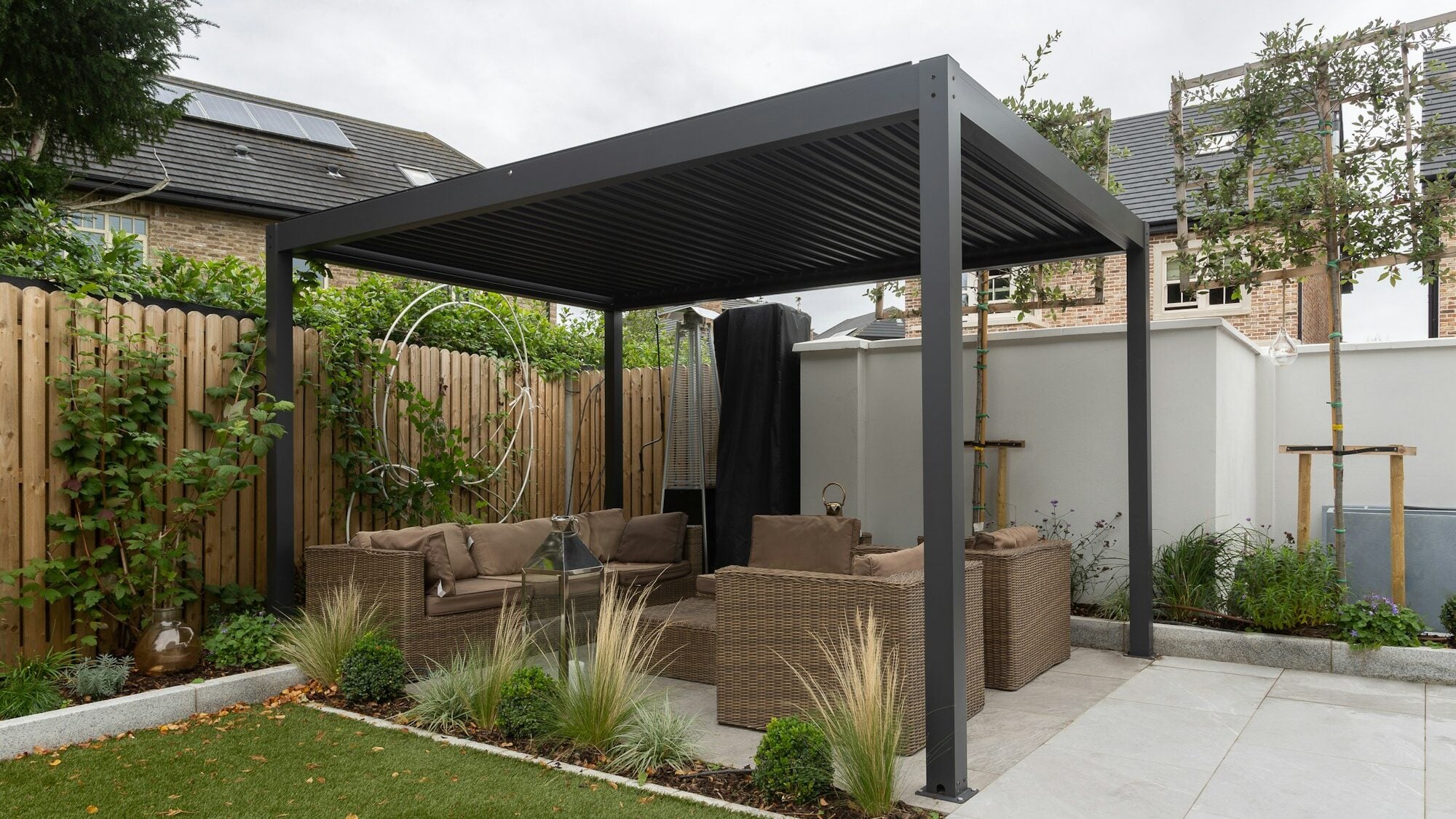
- The price depends on the site visit. Ground, base and access for machinery. A pergola on a flat patio and a pergola on a slope are the same model, but not the same job.
- Competitors read carefully. The most attentive reader of your price list often isn't a customer.
- Selling through partners. When you also sell through dealers and installers, a public price can squeeze the room they have for their own pricing.
- Material prices move. A price list on a website needs maintaining, or it promises last season's figures.
- Fear of the first impression. The worry that a customer sees a number before the value and closes the page.

Competitors don't need binoculars to find your price list. A browser will do.
Each of these reasons makes sense. The question is whether it has to mean the customer gets nothing from you until they write an email.
What price on request costs you
"Price on request" isn't free. You pay for it in time:
- Enquiries without a brief. A customer who sees no number and no options writes the shortest thing possible: "How much would it cost?" The salesperson gets the rest out of them one question at a time.
- Conversations with the wrong budget. Sales time goes to people whose expectations and your price will never meet, and you find out only at the quote.
- Silent exits. Some visitors never write at all, and you never learn that you could have suited them.
Three ways to show the price in a configurator
A configurator changes the question. You're no longer deciding whether to show a price, but which one.
An exact price from your price list
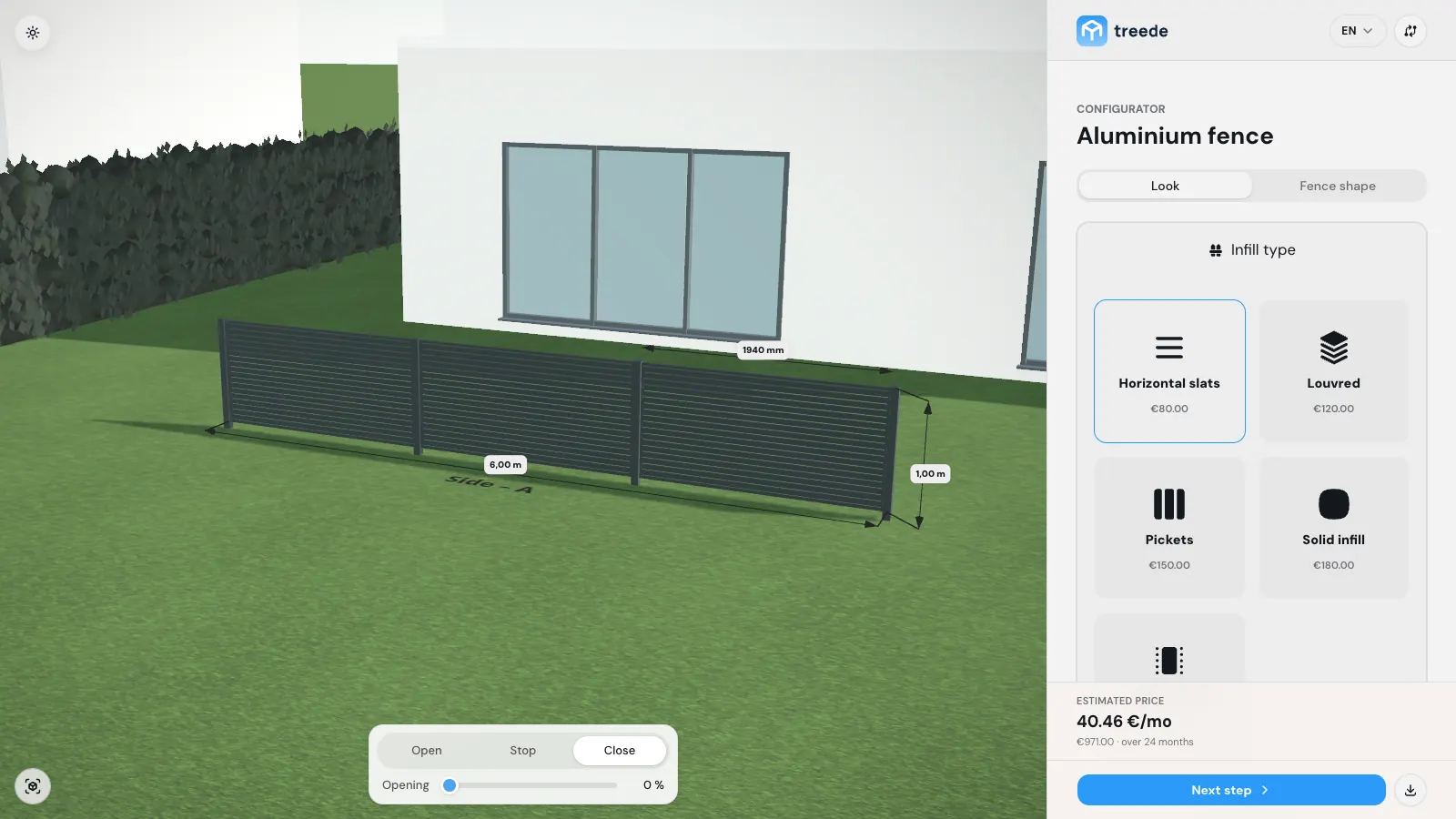
This suits you when your rules cover almost everything that affects the price. The customer changes dimensions and options and the price recalculates with every change. In the fence demo you can see what it looks like: each infill type shows its price, with an estimated total under the design. Prices in the demo are illustrative.
An estimated price
This suits you when the site visit or the installation decides things. The customer sees the figure they're around, and you say clearly what still gets checked on site. The word "estimate" belongs right next to the number, not in a footnote nobody reads.
No public figure
A configurator without a price still makes sense. The customer designs the product, sees it in 3D and sends an enquiry with dimensions, model and options. The salesperson prepares the quote from it without a round of questions. The configuration works as a brief for the salesperson even without a public figure.
During implementation we set up which of these the customer sees.
How to decide: five questions
- Can you work out the price without a site visit? If yes, an exact price is within reach. If not, choose an estimate or none.
- Do you also sell through partners? Consider whether a public price would interfere with their pricing.
- How often do your prices change? The more often, the more it matters that the price list changes in one place.
- Do you want more contacts, or better briefs? A visible price can filter out some people with a different budget. A hidden price can bring more conversations that still need sorting.
- Can your salesperson explain the price in two sentences? If they can't, the website won't manage it for them either.
If you show a price, make it right
The worst price on a website isn't a high one. It's a wrong one. When a customer sees a lower number than the one that later arrives in the quote, they don't think the calculator made a mistake. They think you put your prices up.
So work out the price from the same rules your salesperson uses, not from averages. Why a price per metre misleads for fences is the subject of Why a per-metre calculator lies, and what to do instead. What a fence configurator that counts panels, posts and gates looks like is on the fences solution page.
Frequently asked questions
Can a 3D configurator work without showing the price?
Yes. The customer designs the product and sends an enquiry with dimensions and options, and gets the price in the quote. The configuration serves the salesperson as a brief even without a public figure.
Will a visible price put customers off?
Some, yes. If they're people whose budget would never have met your price anyway, it saves time for you and for them. How it works out for you depends on the product, the market and how you explain the price.
Will competitors see my price list?
If you show exact prices, everyone sees them, competitors included. If you'd rather they didn't, choose an estimate or a configurator with no public figure.
Price on request can stay
You don't have to delete those three words from your website. It's enough that instead of "how much does it cost" they bring in an enquiry with dimensions, model and options. Whether your price list and rules are ready for a price to be calculated from them, you can check in the readiness checklist.
And since this whole article has been about prices: running the configurator with treede CRM costs from €200 a month, and we price implementation by scope. The details are on the pricing page, no request needed.