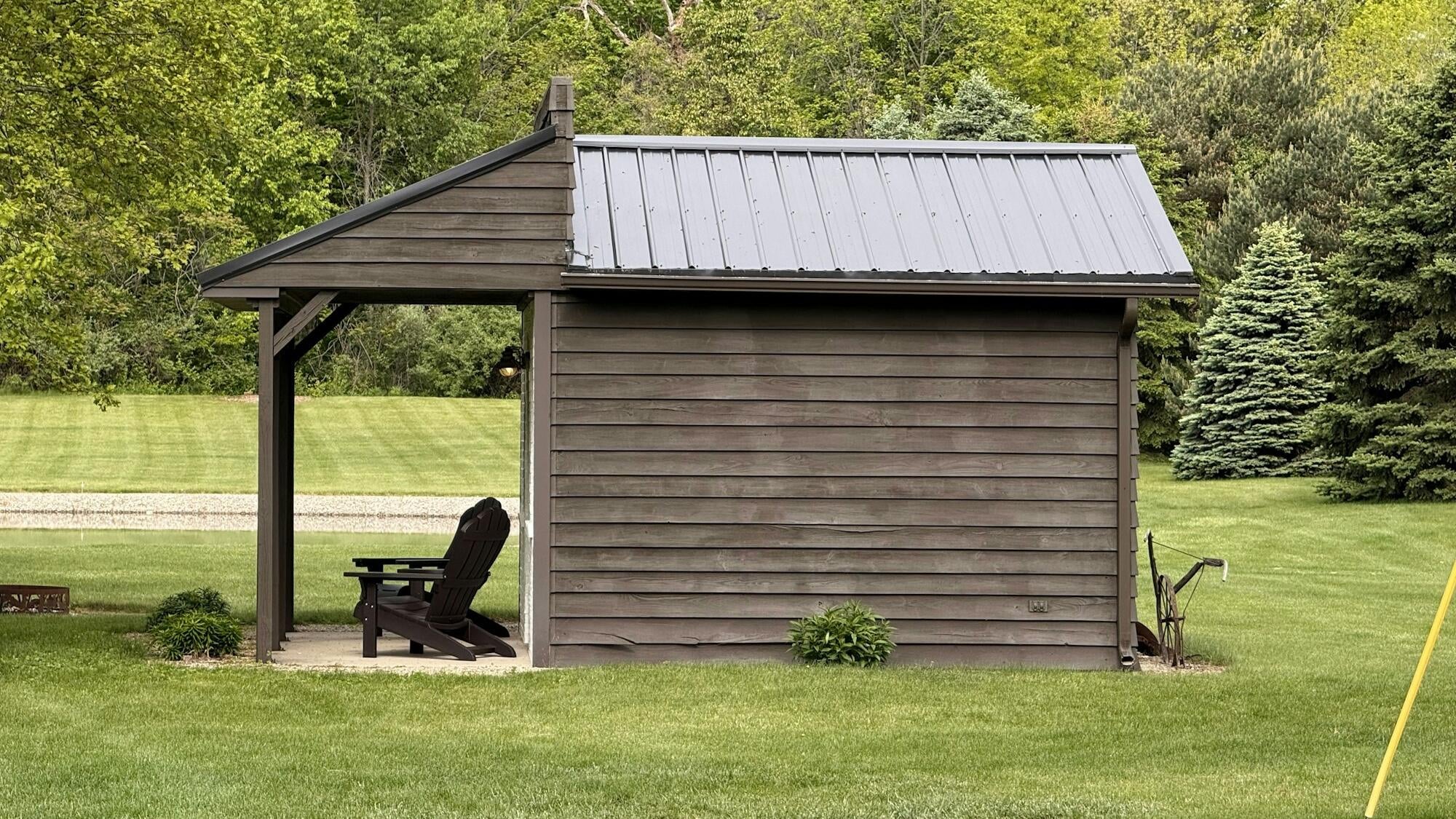

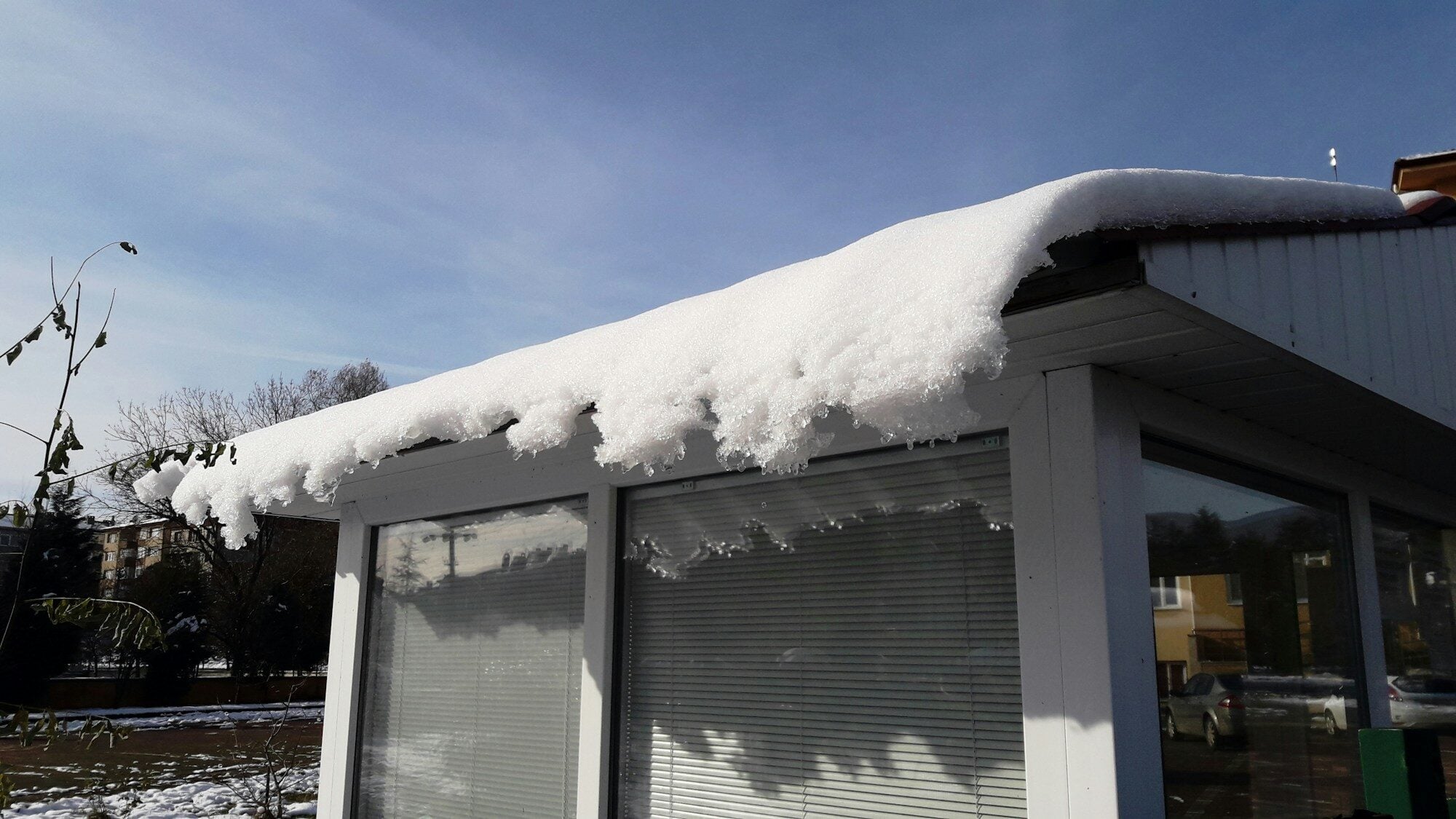
The veranda brochure says: "Snow load capacity 1.5 kN/m²". A customer rings from a village below the mountains and asks whether that will hold at their place. The salesperson opens the brochure, then a map, then calls the engineer.
The figure in the brochure is fine. The manufacturer knows what the structure carries and wrote it down. The problem is that nobody can say whether 1.5 is enough at that particular address. The brochure knows the model. The snow knows the site.
Snow load is the load a roof has to carry because of where the building stands. EN 1991-1-3 works it out from the ground snow value for the snow region, the roof pitch and the surroundings. On an ordinary roof pitched up to 30°, it is 0.8 times the ground value, and more next to the wall of a taller house. For a manufacturer that means one thing: the same model needs a different span in the lowlands than in the mountains, and both the price list and the configurator have to know where it will stand.
What one figure for the whole country costs
When the price list knows the model and the size but not the site, snow shows up like this:
- Every mountain job goes through the engineer. The salesperson can't answer, and the engineer works out what they worked out last week for the next village.
- Headroom for everyone. The firm designs every unit for the mountains. In the lowlands it is then dearer than the competition, and the customer doesn't know why.
- An extra charge after signing. The price is a lowland price, the site survey finds the foothills and a post is added. The customer remembers that the price went up.
- The house wall. An extension against a taller house also gets the snow the wind piles against the wall. The brochure doesn't mention it.
- Roofing. Polycarbonate, glass and steel cope with snow differently. The customer picks by colour.
Nobody is doing anything wrong here. The brochure describes the product, and snow is a property of the plot.
How snow load on a roof is calculated
EN 1991-1-3 calculates the roof load as the product of four numbers:
- Ground snow (sk). The value for the site from the national snow map, in kN/m².
- Shape coefficient (μ). For a roof pitched up to 30° it is 0.8. Above 30° it falls, reaching zero at 60°, because snow slides off a steep roof. If it can't slide, for instance because of a snow guard, it stays at 0.8.
- Exposure coefficient (Ce). 0.8 for a windswept roof, 1.0 for a normal one, 1.2 for a roof sheltered between buildings.
- Thermal coefficient (Ct). Accounts for heat passing through the roof from the building below.
For scale: 1 kN/m² is about 102 kg per square metre. Sellers often write "100 kg/m²", which is a rounding.
Next to the wall of a taller building, drifted snow is added. The standard deals with it separately (clause 5.3.6), and on a low roof beside a tall wall the load at the wall can be several times the load in the middle. That applies to every pergola, veranda and carport fixed to a house.
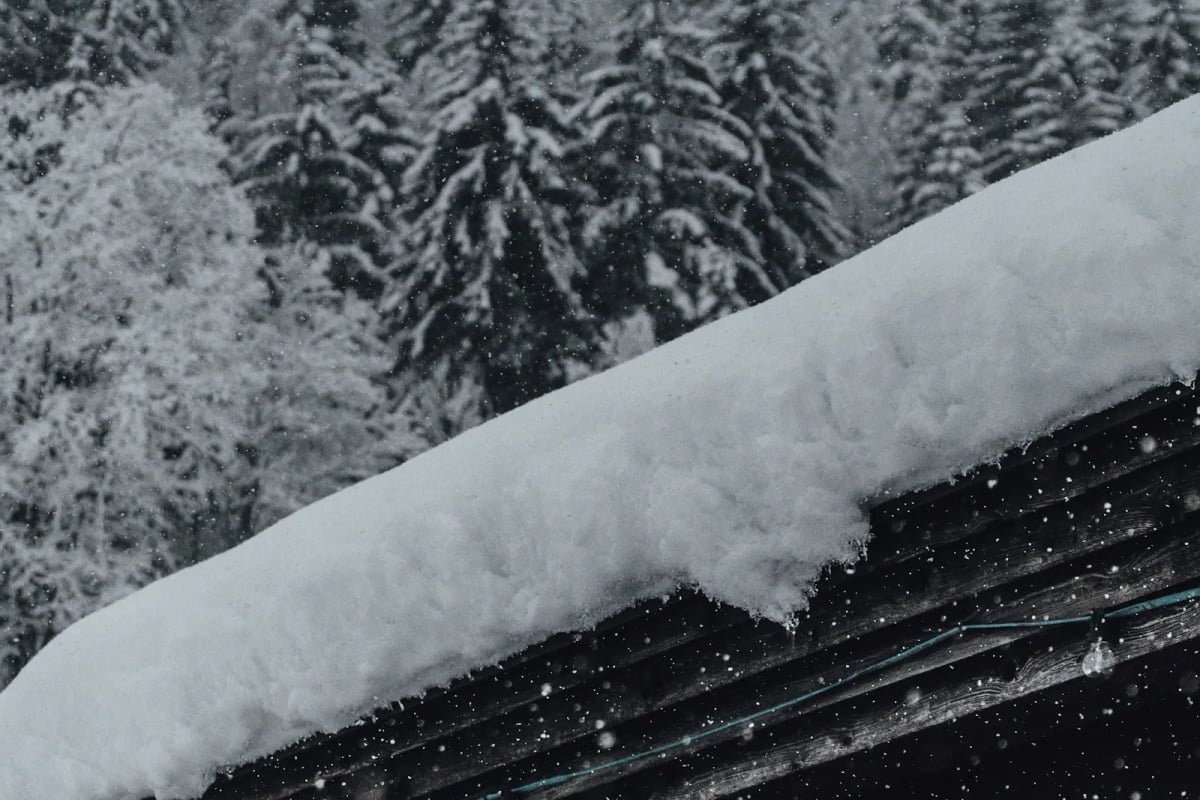
Slovakia: five regions and altitude
The national annex STN EN 1991-1-3/NA1 from 2012 divides the country into five snow regions and calculates the ground value in each from the altitude. Two villages in the same region can have different figures if one sits in a valley and the other on a hill.
Czechia: eight snow regions
The map in the national annex to ČSN EN 1991-1-3 divides the country into regions I to VIII with values of 0.7, 1.0, 1.5, 2.0, 2.5, 3.0 and 4.0 kN/m². Region VIII is above 4.0 and set individually. The current edition runs alongside the new third edition until 31 March 2028 (tzb-info).
Finland: from 2.0 to 3.5 kN/m²
The values are set by the Ministry of the Environment decree YMa 6/16. The map has contours at 2.0, 2.5, 2.75, 3.0 and 3.5 kN/m², interpolated in between. The roof load may not come out below 0.5 kN/m².
What snow changes in the product
The span between posts gets shorter
On a glass-roof veranda, the distance between posts decides. The existing foundation supports three snow classes for verandas: in the higher class the largest span between posts drops to 85%, in the highest to 70%, and rafters are no more than 500 mm apart. A veranda of the same width gets one more post in the mountains.
Roofing is chosen by snow
In our carport engine, polycarbonate can't be selected from snow class S3 upwards, and the roofing switches to trapezoidal steel with a notice. Above 3.0 kN/m² the demo price isn't shown and a structural engineer decides. The engine is in preparation, and its rules are described in detail in A carport isn't a small pergola.
The house wall raises the class
A carport fixed to a house inherits the snow from the house roof. A configurator that knows the eaves height can raise the class itself, instead of the engineer finding out at the order stage.
Where a configurator helps
A configurator doesn't do structural calculations. It does something simpler and more useful for sales: it connects the site to the rules you already have.
- The customer enters the site or the snow region. The configurator picks the class from your table.
- The class changes the structure. A post is added, rafters move closer, roofing that can't take it disappears.
- The price includes it. The indicative price is for that address, not an average.
- Above the limit, a person decides. Where your structural tables end, the configurator shows no price and sends the enquiry to the engineer.
During implementation we set the classes and spans from your structural tables. The figures come from you; we don't invent them.
When a snow class in the configurator isn't worth it
Not every manufacturer needs them:
- You only sell in one region. If you install within 50 km of a lowland workshop, one class is the truth and more would just be extra choice.
- An engineer calculates every job anyway. For large one-off structures the calculation is part of the quote, and a configurator has nothing to add.
- The product has no roof. Fences and gates don't carry snow, and their rules are different.
If you didn't recognise yourself in any of these, carry on.
A five-minute test: does your price list know where it will stand?
- Does the price list have a column for the snow region? If not, one price covers the lowlands and the mountains.
- Can the salesperson answer without the engineer? If not, the classes live in one person's head.
- Does the enquiry form ask for the site? Without it, snow is found out at the site survey.
- Do you know what you do at the house wall? If the answer is "we'll see", it's one for the engineer.
The first step takes five minutes: write down the snow value at which your post, rafter and roofing change. Those three numbers are the whole rule.
Where snow load decides
- Verandas and conservatories: the span between posts, the rafter spacing, glass or polycarbonate.
- Patio roofs and pergolas: pitch, roofing and, for louvred roofs, what the maker prescribes for winter.
- Carports: width without a middle post, the house wall, solar panels on the roof.
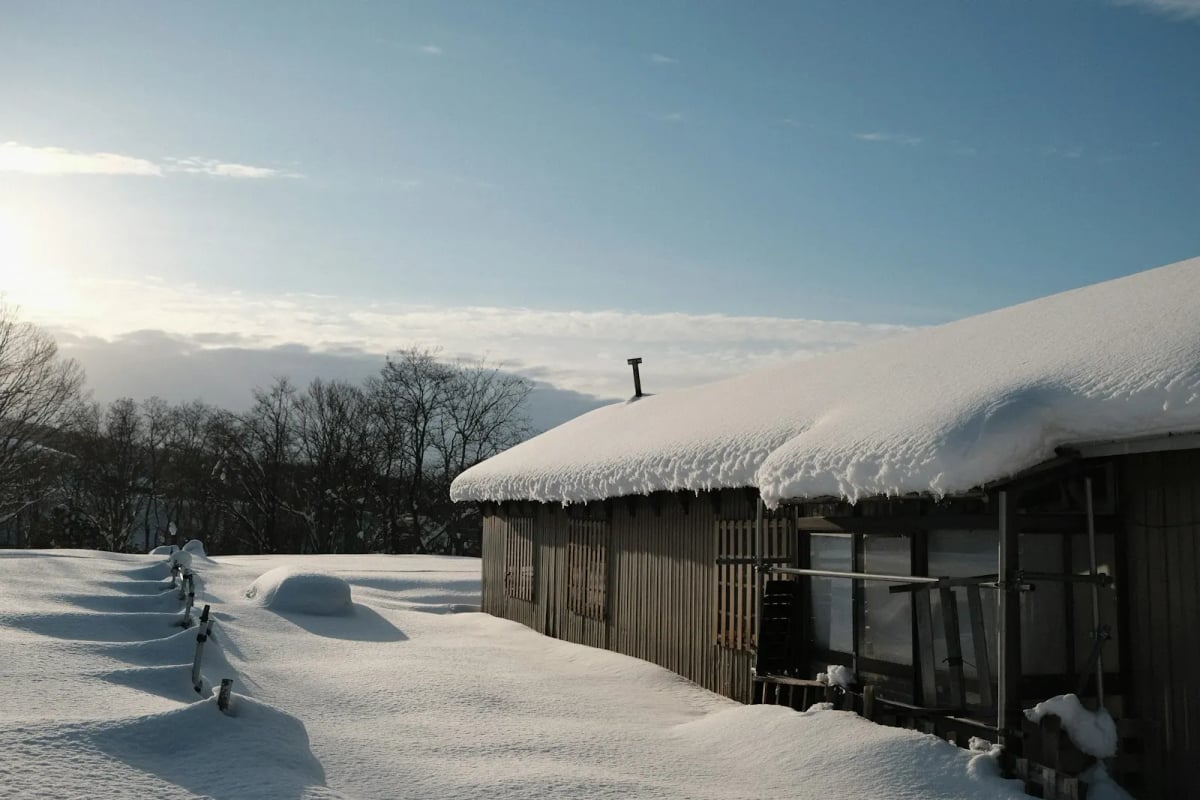
- Garden buildings and saunas: rafters, roof overhang and a snow guard that changes the calculation.
The full list of 305 product types is in the configurator catalogue. The veranda and the patio roof are compared in A patio roof isn't one product.
Frequently asked questions
How many kg is 1 kN/m²?
About 102 kg per square metre. How many centimetres of snow that is depends on its density: wet snow weighs several times more than fresh powder.
How do I find the snow region?
From the map in that country's national annex to the standard. In Slovakia the altitude is needed as well as the region. A structural engineer decides on the design.
Is there a new standard from 2025?
The second generation of EN 1991-1-3 was published in 2025, with changes to drifted snow. National editions are being introduced gradually and the old ones remain valid alongside them, in Czechia until 31 March 2028. Finland does not use the new edition yet.
What now
And the line "Snow load capacity 1.5 kN/m²"? Keep it in the brochure. Just connect it to the map, so it becomes an answer for a specific address.
If you already have structural span tables, see what a configurator with treede CRM costs.